Urban Garden Center
Calathea Rattlesnake
Calathea Rattlesnake
Couldn't load pickup availability
- NYC delivery from $15 · exact cost shown at checkout
- Free pickup at 1560 Park Ave · usually ready within 24 hrs
- Featured in The New York Times
- Open daily: Mon–Fri 10–7, Sat–Sun 10–5
- Questions? 646-389-4299
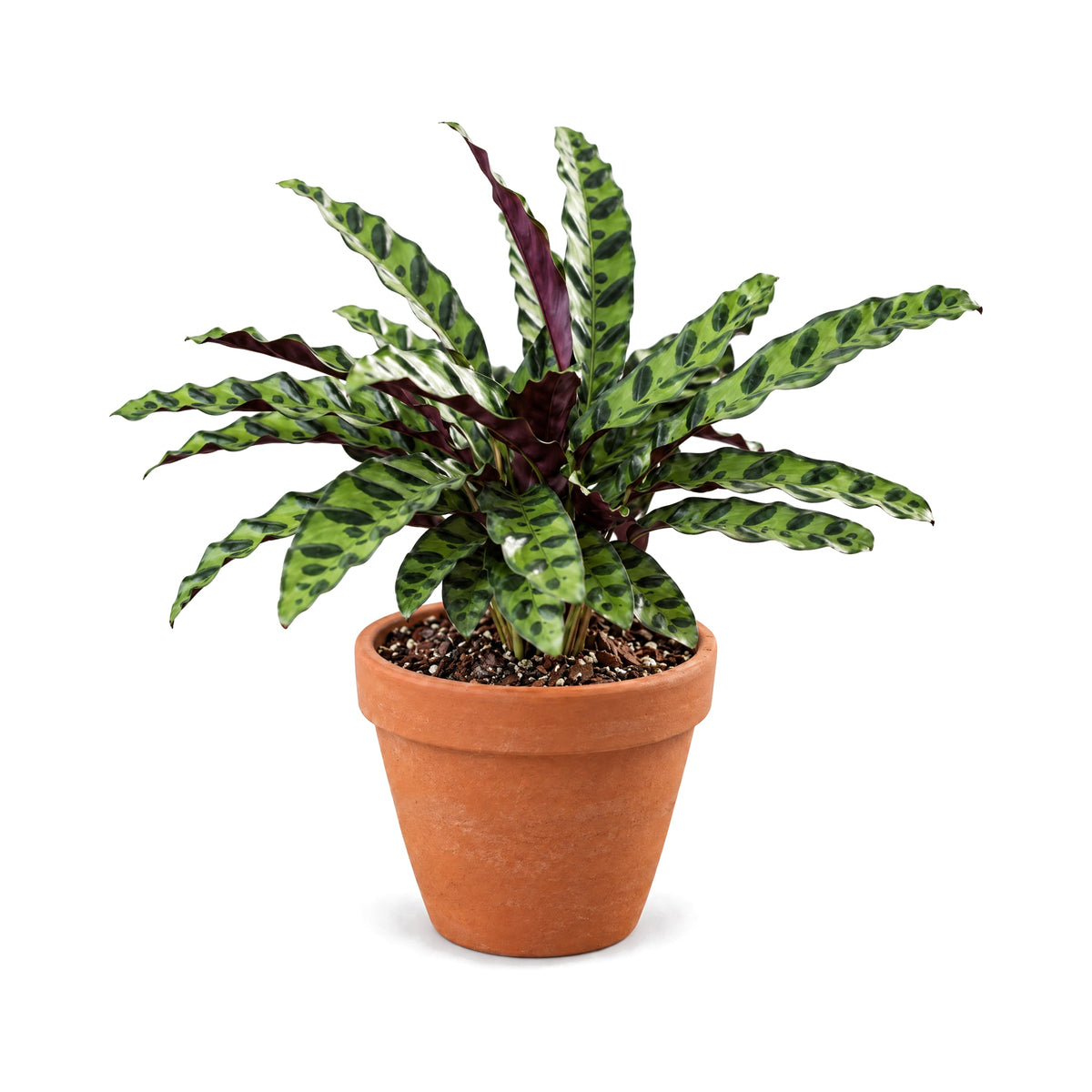
This image is a close match to the real plant, but we cannot guarantee it will look exactly like this. Indoor plants come in a grower's pot. The terracotta pot in the photo is for display.
Plant care at a glance
- Light
- Low Light · Bright Indirect
- Water
- High
- Skill level
- Intermediate
- Pets
- Non-toxic to cats and dogs (ASPCA) ASPCA plant list (opens in a new window)
Shop in person: 1560 Park Avenue at 111th Street, East Harlem · Mon–Fri 10 AM–7 PM, Sat–Sun 10 AM–5 PM
The Calathea Rattlesnake (scientifically known as Goeppertia insignis, formerly Calathea lancifolia) is a tropical perennial native to the rainforests of Brazil, belonging to the Marantaceae family. It is characterized by its long, lance-shaped leaves with wavy edges that feature alternating dark green blotches on a pale green background, resembling the markings of a rattlesnake.
Key physical and behavioral traits include:
-
Leaf Undersides: The leaves have a striking deep purple to maroon underside, visible when the leaves fold up at night.
-
Movement: As a "prayer plant," it exhibits nyctinasty, where leaves fold upward in the evening and relax flat during the day.
-
Size: Indoors, it typically reaches 1.5 to 2.5 feet tall with a spread of 18 to 36 inches, though it can grow up to 2.5 feet outdoors in tropical climates.
-
Flowers: While it rarely blooms indoors, it produces small yellow, white, or purple tubular flowers on 2–4 inch spikes in late spring to early summer in its native habitat or warm outdoor zones (10–12)
-
The plant thrives in warm, humid environments with indirect or filtered light, making it a popular, pet-safe houseplant for homes with cats and dogs. It prefers consistently moist, well-draining soil and temperatures between 65°F and 80°F, avoiding cold drafts and direct sun which can scorch its foliage.
Share